Thứ Ba, 24 tháng 12, 2013

Used Car Prices Aren't Sensible

I don't normally link to other blogs, but here is a neat little post on a behavioral economics study of discontinuity in used car prices. There's no particular reason a car with 49,900 miles should be much different from one with 50,100 miles. But that's not what we actually observe. Pricenomics calls attention to a paper by Devin Pope, Meghan Busse, Nicola Lacetera, Jorge Silva-Risso, and Justin Sydnor (2013). "Estimating the Effect of Salience in Wholesale and Retail Car Markets." American Economic Review Papers and Proceedings (103(3): 570-74. As Pricenomies summarizes it in "How We Misprice Used Cars":

The researchers attribute the mispricing to “left-digit bias”. Buyers try to simplify the information available to them by only focusing on what they deem most relevant. And this bias represents $2.4 billion worth of mispricing.

Actually, the paper itself is quite readable. As the co-authors phrase it:

Modern economic life requires individuals to evaluate many pieces of decision-relevant information every day. A growing body of evidence shows that not all information is equally salient to consumers.1 This is the case even for large-scale purchases made in well-functioning markets such as the market for automobiles...

The short paper above draws on the following, which presents the empirical details of their statistical tests for "irrational" pricing: Nicola Lacetera, Devin G. Pope, and Justin R. Sydnor (2012). "Heuristic Thinking and Limited Attention in the Car Market." American Economic Review 102(5): 2206–2236. That longer article is very much aimed at specialists. Thus prose such as the following:

Motivated by the literature on regression discontinuity designs (see Lee and Lemieux 2010 for an overview), we employ the following regression specification:

mike smitka

Thứ Hai, 23 tháng 12, 2013

The Global Industry: Honda, the US and the Taper

http://www.tapirs.org/
Go to the URL to contribute to
preserving tapirs in the wild!

...bond markets reacted to the taper with a yawn...

The "taper" in practice started with a whimper not a bang. Instead of purchasing a $1.02 trillion SAAR the Fed reduced its purchases to $0.90 trillion – that is, $900 billion. Yes, the announcement suggested additional reductions at each FOMC meetings in 2014, but cutting purchases by $10 per month in several steps means the Fed is still poised to purchase another $500 billion in bonds, while promising to keep short-term interest rates at 0% until we get substantially lower unemployment or higher inflation, which in practice means well into 2015 if not beyond. In reaction, bond markets reacted to the taper with a yawn – rates at all ends of the maturity spectrum, from 1 month to 30 years, shifted 2-4 basis points at long maturities and actually fell out to 3 years. There's no sign that the markets whose entire focus is interest rates expect any effective change in monetary policy. (Indeed, I read it as saying that bond markets don't think taper or its lack matter – while stock prices are driven by the story of the hour and not by data.)

...the US is becoming an export base...

So what's with "global" and "Honda"? First, the dollar has appreciated relative to the yen – Japanese are looking at their domestic interest rates and judge that parking their money in dollars is the better choice. But if Abenomics works, their interest rates will rise. (And if it doesn't, the decline of Japan's domestic auto market will accelerate; see an older post here on the interaction of a falling and aging population on the demand for cars.) But even if the yen stays at its current level, Honda will find it increasingly hard to recruit workers in Japan, and will find little reason to bet on the yen's exchange rate for deciding where to make global models. In that context, it is important to note that Honda has adopted English as its global language, replacing Japanese. Quietly, Honda has also reached the point where it develops market-specific products (for "market-specific" read "North America") in Ohio.

But the dollar has depreciated relative to the Euro and the Chinese RMB, and has strengthened (or at least not weakened) against the Canadian dollar and Mexico peso. The yen exchange rate is an outlier. In that context (Takanobu) Ito, Honda's CEO, notes that the company is expecting its North American operations to export 30%, up from the current 6%-7%. BMW already exports 70% of the output at its Spartanburg SC plant; I expect others to gradually shift in the same direction. Toyota noted that it will export 7,500 Corollas to the Caribbean and Latin America from Mississippi in its initial year of production there, hardly an impressive number but meaning that these vehicles won't be exported from Japan. If you Google firm by firm you'll find similar stories for Ford, Nissan and others. So the word on the street matches US International Trade Administration's analysis of Trends in Motor Vehicle Exports.

Given the lead times in building capacity and making sourcing decisions, such plans could slow if the yen remains sufficiently weak. At the same time, VW's construction of North American capacity means fewer imports from the EU. And in my visits to suppliers – I will visit 5 firms for the 2014 PACE supplier innovation award – I am hearing of plans to add engineers in Southeast Michigan and Northern Ohio.

Now to be honest this has yet to show up in the automotive sector trade deficit. Yet what I would normally expect to see in the data is that a recovery in the US would lead to a sharp upturn in imports without a corresponding shift in exports. We don't see that, either. I don't expect the US to ever turn into the export powerhouse that Japan once was; global growth means that global vehicles will be made in multiple markets. Tariffs in the BRICs reinforce that tendency. We also need to remember that productivity is up, and that manufacturing employment in the US auto and auto parts sector will therefore increase by less than output. Despite these provisos, it's clear that the US is becoming an automotive export base, and continuing to be an engineering center. It's a nice note on which to end the year.

For background, compare US Treasury Yields and European Bond Rates. When the EU begins growing properly – which as with the US may require several years – then interest rates should rise relative to those in the US and make Euro assets more attractive relative to US dollar assets. I thus expect that over time the Euro will appreciate / the dollar depreciate. However, the timing is sufficiently uncertain that investing on this basis is not likely to pay. If it would, then big money would already be doing so and the Euro would already have appreciated ... whatever the weaknesses of the efficient market hypothesis, there is plenty of evidence that such predictable movements get arbitraged away, leaving markets sufficiently unpredictable as to not offer consistently prfitable strategies.

US$-Mexican PesoUS$-Chinese Yuan
US$-Japanese YenUS$-EU Euro
Auto Sector Imports & Exports, 1965-dateAuto Sector Imports, Exports and Sectoral Trade Balance, 1980-date

Thứ Năm, 19 tháng 12, 2013

The Best Car Ever

Guest post by Blake Grady, edited by the prof with comments from Econ 244 participants. Original was from May 17, 2013.
This is one I had in draft form but apparently forgot to publish last spring – my apologies to Blake and commenters

Tesla Model S

Consumer Reports recently gave the Tesla Model S a score of 99 out of 100, and other media outlets immediately began proclaiming that the car could be the best vehicle ever made. A small number of journalists responded by arguing that the entire idea of a "best car" simply doesn't make any sense.

...the entire [ratings] concept ... makes no sense

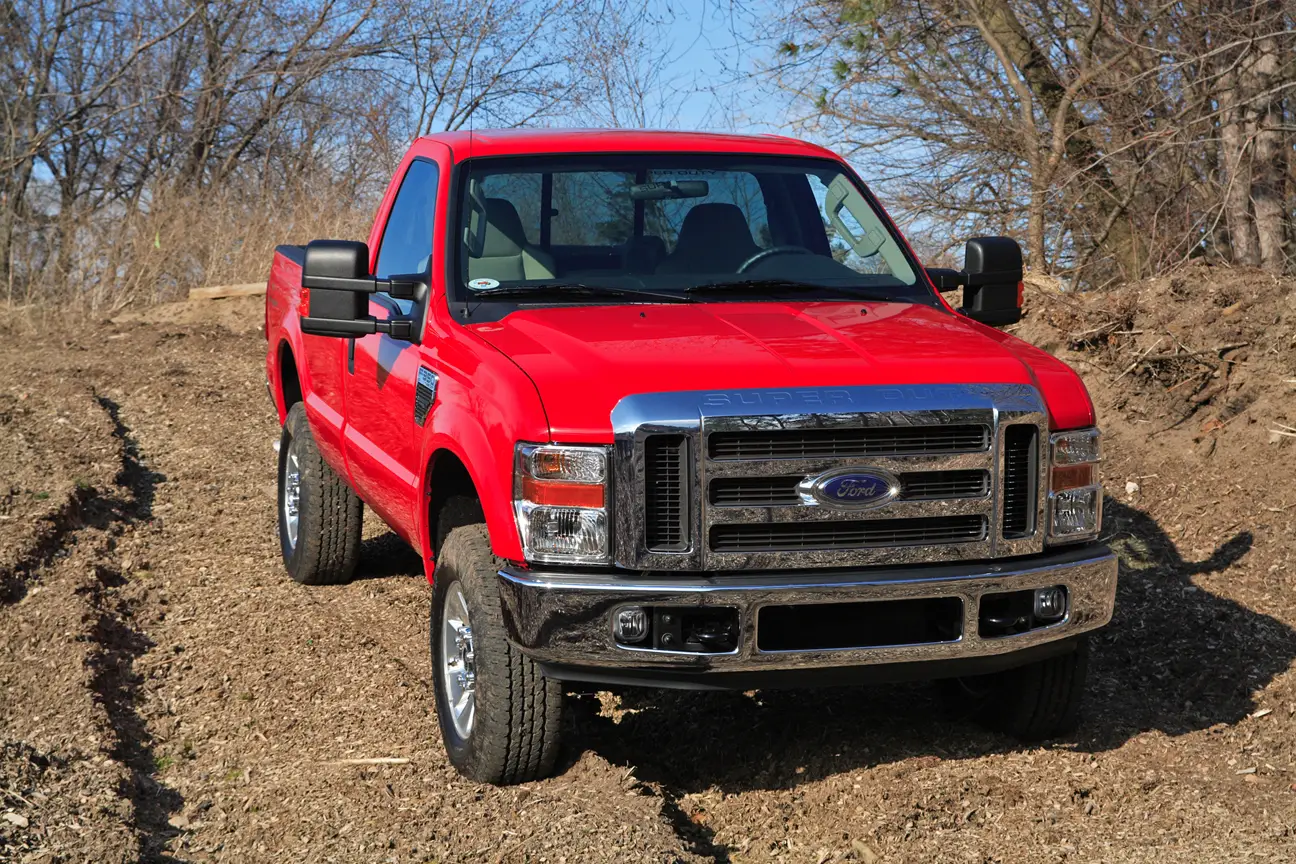
Does this vehicle look comparable to the Tesla Model S?

I agree with them, but I drew an even more extreme conclusion from reading about the car and the consumer reports rating system: the entire concept doesn't make any sense. People buy cars for remarkably different reasons: perhaps a Range Rover to drive around Manhattan in isolated comfort, or the same Range Rover to tow horses to a show. In this case, even with the same vehicle, it would receive two different ratings: one of the New Yorker and one for the horse owner.

This issue becomes worse when trying to compare different vehicles. Comparing an F-350 pickup to a Tesla Model S on the same rating system is almost impossible. The question then becomes why do journalists use this system? My guess is that reviewers have found that people find the ratings systems more interesting when they can compare all of the models together, even if they make less sense that way.

The prof pointed out that such rankings have two audiences. One is the car guys (and gals) who like to argue about features and driveability and styling. Ratings are great to spur discussions over beer (or, perhaps for a Tesla, wine). The other are car purchasers, who are likely to look at sites that compare cars within the same segment. For them, these grand competitions and “best of the best” ranking games are not meaningful, as you point out. However, cars are an aspirational purchase, and “halo” cars and the general image of a brand matter. If nothing else, you want all your cars to have decent to good ratings…

Tyler Kaelin agrees as one of those car guys. Although I read car reviews all the time, my parents (people who have actually bought cars before!) could care less. Their concerns are general reputation in terms of quality and reliability, price, and the test drive. Where does that leave the purpose of these reviews, I begin to wonder? Maybe they are part of that “general reputation.”

Griffin Cook notes that a unified rating system makes sense given a very specific [strong!] requirement: that it is based on the “drivability” of the car and ignores function. In this sense, the slower, less fuel efficient F-350 is a lesser car then the Model S. While a pickup truck is obviously meant to serve a different function, the point of a view of a driver behind the wheel matters. However, Consumer Reports is not that narrowly focused, and their subjective reviews do not provide consistent information for potential buyers who consider their opinion to be authoritative.

Daniel Tomm seconded Blake: the rating system does not make sense if comparing an SUV to a sedan. It would be fine if they had different classes for each type of vehicle (i.e. SUV, light truck, heavy truck, sports car, sedan). Each vehicle serves its purpose — though I do not know what category concept cars such as the ME.WE would fall in. Personal preference makes a difference and like Tyler and the professor said, the car purchaser has the ultimate say. I know when I was first looking at cars, trucks were out of the question because my father thought they were impractical and I would never be lugging around logs or construction equipment. In terms of reviews I never truly looked at “best of the best” but if I saw a car I liked and a friend drove it I would ask their general opinion in order to get real feedback from someone who was not trying to sell me the car.

Thứ Tư, 18 tháng 12, 2013

The ultimate show-me car

It's one thing to say you can do something. It's another thing to prove it. Which helps explain why we create technology concept cars.

You see, we like to tell people that flexibility and customization form the very DNA of the QNX CAR Platform for Infotainment. Which they do. But in the automotive world, people don't just say "tell me"; they say "show me". And so, we used the platform to transform a Bentley Continental GT into a unique concept car, equipped with features never before seen in a vehicle.

Now here's the thing. This is the same QNX CAR Platform found in the QNX reference vehicle, which I discussed last week. But when you compare the infotainment systems in the two vehicles, the differences are dramatic: different features, different branding, different look-and-feel.

The explanation is simple: The reference vehicle shows what the QNX CAR Platform can do out of the box, while the Bentley demonstrates what the platform lets you do once you add your imagination to mix. One platform, many possibilities.

Enough talk; time to look at the car. And let's start with the exterior, because wow:


The awesome (and full HD) center stack
And now let's move to the interior, where the first thing you see is a gorgeous center stack. This immense touchscreen features a gracefully curved surface, full HD graphics, and TI’s optical touch input technology, which allows a physical control knob to be mounted directly on the screen — a feature that’s cool and useful. The center stack supports a variety of applications, including a 3D navigation system from Elektrobit that makes full use of the display:


At 17 inches, the display is big enough to display other functions, such as the car’s media player or virtual mechanic, and still have plenty of room for navigation:


The awesome (and very configurable) digital instrument cluster
The instrument cluster is implemented entirely in software, though you would hardly know it — the virtual gauges are impressively realistic. More impressive still is the cluster’s ability to morph itself on the fly. Put the car in Drive, and the cluster will display a tach, gas gauge, temperature gauge, and turn-by-turn directions — the cluster pulls these directions from the center stack’s navigation system. Put the car in Reverse, and the cluster will display a video feed from the car’s backup camera. You can also have the cluster display the current weather and current sound track:


The awesome (and just plain fun) web app
The web app works with any web browser and allows the driver to view data that the car publishes to the cloud, such as fluid levels, tire pressure, brake wear, and the current track being played by the infotainment system. It even allows the driver to remotely start or stop the engine, open or close windows, and so on:


The awesome (and nicely integrated) smartphone support
The Bentley also showcases how the QNX CAR Platform enables advanced integration with popular smartphones. For instance, the car can communicate with a smartphone to stream music, or to provide notifications of incoming email, news feeds, and other real-time information — all displayed in a manner appropriate to the automotive context. Here's an example:


The awesome everything else
I’ve only scratched the surface of what the car can do. For instance, it also provides:

  • Advanced voice rec — Just say “Hello Bentley,” and the car’s voice recognition system immediately comes to life and begins to interact with you — in a British accent, of course.
     
  • Advanced multimedia system — Includes support for Internet radio.
     
  • Video conferencing with realistic telepresence — Separate cameras for the driver and passenger provide independent video streams, while fullband voice technology from QNX offers expanded bandwidth for greater telepresence.
     
  • LTE connectivity — The car features an LTE radio modem, as well as a Wi-Fi hotspot for devices you bring into the car.

Moving pictures
Okay, time for some video. Here's a fun look at the making of the car:


And here's a run-through of the car's many capabilities, filmed by our friends at TI during 2013 CES:


Thứ Ba, 17 tháng 12, 2013

Bentley launches new models, to build SUVs

According to a press release, Bentley Motors UK has confirmed that it will build the world’s fastest and most luxurious SUV - the first off-road vehicle in the marque’s history.

This was announced at the launch at its Crewe HQs, of three new Bentley models, namely, the Flying Spur sedan, the Continental 4.0 litre GT V8 S and the 6.0 litre Continental GT Speed Convertible. The later is considered the world’s fastest four-seat production convertible.

Bentley Flying Spur

Continental GT V8 S

Continental GT Speed Convertible

The production of the new model will create new 1,000 jobs at Bentley and its suppliers.

The company recorded strong sales increases through the first three quarters of 2013 (delivering a total of 6,516 cars against 5,969 in 2012) and opening of 23 international dealerships in locations from Bucharest, Lyon and Minsk through to Hanoi (Vietnam) and the famous Silk Road city of Urumqi.

Thứ Tư, 11 tháng 12, 2013

Is this the most jazzed-up Jeep ever to hit CES?

The fourth installment in the CES Cars of Fame series. Our inductee for this week: a Jeep that gets personal.

Paul Leroux
It might not be as hip as the Prius or as fast as the Porsche. But it's fun, practical, and flexible. Better yet, you can drive it just about anywhere. Which makes it the perfect vehicle to demonstrate the latest features of the QNX CAR Platform for Infotainment.

It's called the QNX reference vehicle, and it's been to CES in Las Vegas, as well as to Detroit, New York City, and lots of places in between. It's our go-to vehicle for whenever we want to hit the road and showcase our latest infotainment technology. It even made a guest appearance at IBM's recent Information On Demand 2013 Big Data conference, where it demonstrated the power of connecting cars to the cloud.

The reference vehicle, which is based on a Jeep Wrangler, serves a different purpose than our technology concept cars. Those vehicles take the QNX CAR Platform as a starting point to demonstrate how the platform can help automakers hit new levels of innovation. The reference vehicle plays a more modest, but equally important, role: to show what our the platform can do out of the box.

For instance, we updated the Jeep recently to show how version 2.1 of the QNX CAR Platform will allow developers to blend a variety of application and HMI technologies on the same display. In this case, the Jeep's head unit is running a mix of native, HTML5, and Android apps on an HMI built with the Qt application framework:


Getting personal
We also use the Jeep to demonstrate the platform's support for customization and personalization. For instance, here is the first demonstration instrument cluster we created specifically for the Jeep:


And here's a more recent version:


These clusters may look very different, but they share the same underlying features, such as the ability to display turn-by-turn directions, weather updates, and other information provided by the head unit.

Keeping with the theme of personalization, the Jeep also demonstrates how the QNX CAR Platform allows developers to create re-skinnable HMIs. Here, for example, is a radio app in one skin:


And here's the same app in a different skin:


This re-skinnability isn't just cool; it also demonstrates how the QNX CAR Platform can help automotive developers create a single underlying code base and re-use it across multiple vehicle lines. Good, that.

Getting complementary
The Jeep is also the perfect vehicle to showcase the ecosystem of complementary apps and services integrated with the QNX CAR Platform, such as the (very cool) street director navigation system from Elektrobit:


To return to the question, is this really the most jazzed-up Jeep to hit CES? Well, it will be making a return trip to CES in just a few weeks, with a whole new software build. So if you're in town, drop by and let us know what you think.

Klocwork joins QNX automotive safety ecosystem

Paul Leroux
This just in: Klocwork, a leader in development tools for creating secure software, has become an ecosystem partner for the QNX Automotive Safety Program for ISO 26262.

Klocwork joins a roster of companies, including Elektrobit, Freescale, NVIDIA, and TI, who already support the program, which is designed to help automotive companies build digital instrument clusters, ADAS systems, and other products with functional safety requirements.

Klocwork offers Insight, a source code analysis tool recently certified to the ISO 26262 and IEC 61508 functional safety standards. Insight plugs directly into the QNX Momentics Tool Suite, allowing developers to detect security and safety vulnerabilities on the fly, and to ensure their code meets functional safety standards.

"Klocwork Insight provides real-time feedback during code development, immediately alerting developers to code that may conflict with the MISRA C/C++ coding standards required by ISO 26262," said Grant Courville, director of product management at QNX. "Better yet, Insight plugs into our IDE to provide a seamless and productive development experience."

The QNX Automotive Safety Program for ISO 26262 was created to help automotive companies building functional safety products to leverage QNX Software Systems’ proven competency in certifications, safety-critical systems, and automotive software design. Key elements of the program include an example safety case based on the QNX Neutrino RTOS Safe Kernel, guidelines on safety-critical design for real-time OS-based systems, a suite of professional services, and an ecosystem of supporting vendors who offer complementary hardware, tool chains, graphics technologies, and consulting services for safety critical systems.

Read the press release.

Thứ Ba, 10 tháng 12, 2013

Auto Recovery, yes ... but as for the rest


by mike smitka

The US recovery continues at a snail's pace; the auto industry is doing better. The rise in the SAAR [seasonally adjusted annual rate of sales] puts us below the bubble-inflated peak of 2005-6, but given subsequent population growth is at a more sustainable level. Other auto-related indicators show marked improvement, but suggest we still have a ways to go. First, the share of the auto industry (retail and manufacturing) was at 2.3% of the labor force in the late 1990s; it then fell steadily to 2.0% before falling off a cliff in 2008. The nadir was 1.6%; today we're back to 1.8%. That is only about halfway, assuming that other structural changes in the US (the continued growth of healthcare) makes it possible to return to the days of yore.

...automotive employment's only about halfway back...

If we look at the details, we get a more nuanced story. The retail side (which includes auto parts and not just vehicles) peaked at about 1.9 million workers; it fell by 300,000 during the Great Recession, and is now 2/3rds of the way back to that level. Manufacturing took a harder hit, falling from 1.1 million at the start of 2006 to 1.0 million in 2007, before dropping by 400,000 in 2008-9 to just above 600,000 workers or less than half the level of the late 1990s. We're now back to almost 850,000, a sharper rise than in retail, but with further to go. Yes, suppliers are running at more than 100% capacity, and that must normalize. So employment will rise further, as overtime and other expedients are replaced by permanent hires. Still, it's not clear that the US is on track to get back to earlier levels, though over the next few years other changes may help (e.g., Honda's goal to export 30% of US-based production).

But overall the story from labor markets is of an anemic recovery. As the baby boomers retire, the growth of the working age population will slow. At present, however, we're only just keeping up with population growth, and the gap between "normal" employment (I tracked age-specific levels back to 1994) is large, roughly 9.1 million workers as of November 2013. Furthermore, more jobs are part-time while a sizeable share of the labor force that had been working employed full-time are still working short hours. If we adjust for that, we're shy 10.8 million full-time jobs. Let's not forget long-term unemployment either, the 27+ week component is improving but is only down to what had been previously been the historic peak.

Finally, this is not due to boomers entering retirement early. Indeed, participation of older workers has trended up throughout the Great Recession and subsequent recovery. In other words, they aren't retiring with past rapidity. That's part of the reason that prime-aged participation rates remain below historic levels. Again, I've traced these levels back much futher – they were essentially flat going into the Great Recession. Now we can see a small increase since the worst of the recession, but only by about 1 percentage point to 95% of the previous norm. And the rate for young workers (age 20-24) remains in the abyss.

      Click on the graphs to expand!

I've added the export graph (vehicles, engines, parts) from the St Louis Fed "FRED2" data service

Thứ Hai, 9 tháng 12, 2013

So many cores — what to do with them all?

Multi-core processors are clearly becoming the mainstream for automotive infotainment systems. TI’s OMAP processors and their automotive derivatives use dual A15 cores, Freescale's i.MX 6 boasts up to four A9 cores, and other companies also have multi-core architectures in production or on near-term roadmaps. Quad-core A15 processors are just around the corner. As a percentage of overall die area, the CPU core is relatively small, so SoC producers can lay down multiple cores with little impact on cost. GPUs, on the other hand, represent a large percentage of the die area and, as such, are typically instantiated only once per SoC.

Realistically, infotainment systems should no longer be CPU bound. In fact, when looking at leading-edge SoCs available today, many are asking what to do with all that extra CPU just sitting there, waiting to do something. At first blush, the more obvious areas to merge are infotainment and ADAS, or infotainment and digital instrument clusters. This is, at the highest level, pretty much a no-brainer so long as the safety requirements mandated for clusters and ADAS can be achieved.

Thing is, automotive safety standards like ISO 26262 require system-level certifications. As such, the entire system needs to be certified. Already a daunting task for a standalone ADAS system or digital instrument cluster, the problem can become unmanageable when you include the full infotainment stack.

Think about your car. Your cluster does a handful of operations whereas your infotainment system runs a full navigation system, voice recognition, multimedia, device connectivity, and, in the connected case, cloud services. People don't get frustrated trying to figure out how your cluster works (I hope), and they don't give up trying to figure out how fast the car is moving. The same cannot be said for many infotainment systems shipping today. Ask your mother to pair her cell phone to her car. I dare you! The complexity involved in attempting to certify a system that combines infotainment and cluster functions is orders of magnitude higher than certifying a cluster alone.

All is not lost, however. Virtualization offers an elegant way to isolate multiple systems running on a single multi-core SoC. By using virtualization you could seek certification on the cluster without burdening yourself with the infotainment problem and collapse two formerly discrete systems onto one SoC. You would save money and probably get a promotion to boot. Just one thing: there is still only one GPU on the die and both the infotainment system and the cluster rely heavily on that single GPU.

Enter Red Bend Software, a long-time QNX CAR Platform partner for FOTA. They have taken the challenge of virtualizing the GPU head-on and successfully demonstrated the QNX CAR Platform and a Crank Software-based digital instrument cluster running on dual displays driven by a single OMAP 5 at Telematics Munich. I saw it and was impressed with how snappy performance was on the infotainment side and how smooth the needles were (60+ fps) on the cluster.


Using virtualization to drive dual displays from a single TI OMAP 5 processor.

According to Red Bend, they have designed a GPU-sharing architecture that enables multiple guest operating systems to access hardware accelerators, including the GPU, providing isolation between the operating systems while having a minimal impact on overall performance (which probably isn't a huge deal considering how many CPU cores are going to be shipping on a single SoC in the near term). It sounds impressive, but seeing is believing.

Red Bend will next show this demo in the TI Suite at CES (N115 in the North Hall). If system consolidation is something that keeps you up at night, you should really stop by to see what they have done.

Thứ Bảy, 7 tháng 12, 2013

Beanie Babies for Billionaires

As Mainstreet.com phrases it, "kids love collecting." Think Beanie Babies and Cabbage Patch Dolls. Adults, of course are the ones actually doing the buying of would-be collectible toys. Left to themselves, we – guys, anyway – lean towards baseball cards, comic books and hand tools. Among the monied class the list includes wine, cars and mechanical watches. For them BitCoins are the latest fad. There's a bit of mystique, because the technology behind them is complex, so it appeals to technophiles. There's good marketing, with claims that Bitcoins will be secure, anonymous, and free of any government hand. Ideal for that arms shipment? And above all, there are limited numbers, a function of the mathematics of the system.

There's also a whole make-believe world to go along with them. Markets work perfectly. Ah, maybe not so perfectly - you've got a chance for monopoly! There's a romantic storyline, celebrity twins in the Vinkelvoss brothers and Austrian intrigue over monetary systems in a story that's sufficiently convoluted to permit wild flights of fancy.

...BitCoins are virtually harmless...

Then there are the marketing links that give a modicum of respectability, and give hypsters a way to cash in, or cash out. So far though, there's no offering on Nickelodeon. Fads come and go, in ways unpredictable. Cabbage Patch dolls have never gone away; you can still buy Beanie Babies on eBay.

Could BitCoins ever be something more that a toy? I think not. To serve as money, they have to be widely acceptable. With a maximum geologic reserves of only 21 million, diminishing returns have already set in to mining - Bloomberg reported in April that "miners" used $174,000 of electricity a day, enough to power 31,000 homes; that amount is now surely greater. But we in the US live in a society of 315 million people, and in a world of some 7 billion. Even finely subdivided, there will never be enough BitCoins to support the daily transactions of even a middling city. Furthermore, we live in a dynamic world, one that on average is growing. BitCoins by design can't grow with it. Or shrink, if an economy moves into recession. Their value, in terms of goods and services, could never be stable.

Stable they are not. When BitCoin prices are going up percentage points a day, who would want to spend them? When they fall at a similar clip, who would want to keep them? As a virtual entity there's no firm foundation to their value, and there's no central bank (or, for diamonds, no de Beers) to try to set a stable price. This isn't just hypothetical: so far today [December 7, see here] prices have ranged from a low of $780 to a high of $860 and as I write this have fallen to $820. That's an upswing of +10% followed by a drop of 5%, all within a few hours. Over the past month the range is from under $400 to a high of $1200. How can you use this as your daily currency when you have no idea whether you need 1 BitCent or 3 BitCents to do your shopping? Even arms dealers will shy away from them!

Nor would transactions remain cheap. Bitcoins are subject to theft by computer hackers and can be lost if a hard drive crashes. Setting up systems to use them requires being a nerd. For them to be widely used, they'd have to be built into the software used by the local grocery store, tied into payment by cards that could be swiped and automatically cleared against bank accounts to settle bills from suppliers and make payroll. All of this is tied to the ability to borrow and lend. Credit cards aren't cash, they provide loans backed by banks who in turn provide assured payment to stores while bearing an assortment of risks. The idea that a virtual currency could somehow eliminate the costs associated with a financial system is ludicrous. It is based upon a utopia in which "hard coin" is all that exists, where consumers carry around in their pockets all the cash they might need for the week, and where they need neither borrowers nor lenders be. Outside such a utopia, bitcoin transactions will carry fees. (For wonks, they already do: look at the bid/offer spreads on BitCoin exchanges!)

As for me, I've accumulated a modest number of Chinese scrolls and Japanese woodblock prints, of minimal resale value. I've a few potentially collectible books, such as an account by a German visitor to Japan, published in 1888, replete with hand-tinted engravings, and a signed first edition of Tom Wolf's first book, The Kandy-Kolored Tangerine-Flake Streamline Baby, my copy for reading when I assign his seminal story in Economics 244, my Spring auto industry seminar. My copy shows use, and on a rotating basis my scrolls and prints hang on the walls of our house.

Reading isn't an expensive hobby, but taken across the globe, people spend a goodly chunk of money on it, and by and large benefit from it. Children got playtime with their Beanie Babies, at least as long as their moms didn't lock them up to keep them in pristine condition. I'm not sure what sort of psychic pleasures billionaires get. In any case, let them play with BitCoins; they are virtually harmless.

mike smitka

Thứ Năm, 5 tháng 12, 2013

China: The Domestic and the Global Industry

In October 2013 sales in China reached 1.92 million units – see the China Auto Industry Association statistics page for details. That's just shy of a 24 million unit rate, and is surely the largest number of vehicles ever sold in a single market in a month. For GM, sales were 282,000 units – 25% more than US sales that month. Everyone is in the market, or preparing to enter there. The Korean neighbors (Kia and Hyundai, but also Daewoo as part of GM), Japan (or at least the Japan Three of Toyota, Honda and Nissan, and Mazda and Suzuki), Germany (BMW, Mercedes, VW), the Detroit Three and now the French, both PSA and Renault. A host of local firms continue, though most as paper entities. Still, Great Wall, Chery, Geely, BYD, Changan and others.

This raises a host of questions. I focus on two: geography and profitability. I frame my brief analysis using the perspective of the OEMs. Since more and more value added lies with suppliers, that may lead to inappropriate conclusions, but for now I will accept the status quo terms of debate.

...the geography of China's automotive industry makes no economic sense...

First, despite very large production volumes, a side effect of government policy has been to disperse production widely. Even though the Third Front policies of the 1960s are widely understood to have been a failure, the political economy of joint venture approvals has led to factories in locations that make little sense. Today, with the market supply-constrained, that matters little. As competition heats up, however, the costs that accompany scattered locations will become more and more burdensome.

Second, there's profitability. On a global basis, the dark secret is the industry depends on the US market for a disproportionate share of profits. Japan's domestic market is in long-term secular decline, and will remain fundamentally unprofitable despite the dominant position of Toyota. (Suppliers seem to be able to collude with impunity – or so they thought – but Toyota hasn't been successful in being a price leader.) Europe is little better, offset only because of a richer product mix. How profitable is China? To my mind that is the single more important strategic variable the industry faces.

Back to geography. Under Mao local governments were expected to fend for themselves, first and foremost in terms of food but extending to a wide variety of industrial products. Fearing a Soviet attack, Mao deliberately dispersed heavy industry into remote locations. So at the onset of post-Mao reforms, every province and most large cities turned out trucks and passenger cars, even if only a handful a year. In total there were perhaps 120 producers. But political power was likewise dispersed; up-and-coming party officials were rotated through a variety of posts, but anyone slated for top leadership served a stint as a provincial governor or mayor of a prefectural-level city such as Shanghai. To be promoted to the senior leadership in Beijing required presiding over economic growth. So when the government looked to joint ventures to improve motor vehicle production, the result inevitably was one factory here, another there. Local protectionism – in Shanghai you found old generation VW Santanas, in Beijing you found jeeps – reinforced this desire to have your own plant.

China has no equivalent to the 600-mile-long I-75 "automotive alley" in the US, with an agglomeration of suppliers, assemblers and associated engineering centers feeding off of each other in a positive manner. Beijing is 1,300 miles from Guangzhou [Canton] in the south, and several automotive operations are another 400 miles to the northeast of Beijing. Similarly, at the western end of the zone is Kansas City, 700 miles from Detroit and 650 miles from Columbus, OH; Chengdu in the Sichuan basis is 1,200 miles to the west of Shanghai, across rough terrain, and Urumqi is 2,400 miles away.

Perhaps Wuhan will become a nexus – a recent Automotive News China story – but there is none at present at the assembler end. Perhaps suppliers are more concentrated, I know of several engineering centers in Shanghai, proximate to those of VW and GM, the two largest car companies in China. But what this means is that as competition heats up, and the segmentation of the country into regional markets eases, there will be numbers of plants whose location will saddle them with high logistics costs coming and going. As long as the government mandates joint ventures, politics will trump sensible plant siting. The geography of China's industry makes no sense, and will cost firms money.

...GM's & VW's Chinese ventures appear to be quite profitable....

Then there's profitability. Perhaps some suppliers break China out as a separate geographic region, but I've yet to find any. (My understanding is that parts suppliers are not under the stricture of forming joint ventures, though likely many of them have because local partners add value.) Assemblers however are limited to joint ventures, and at the two market leaders (GM and VW) their profits are accounted on an equity basis, rather than as part of normal operating profits. Both however provide that number. It's likely to be an underestimate. The biggest potential divergence would be if these ventures paid dividends; that would reduce retained earnings and the rise in book value. That is, equity income falls, though it would be offset by dividend income. However, neither media reports nor financial statements provide any hint of such payments. Indeed, it's clear that at present all funds are being reinvested. Instead, the (post-tax) equity income is an overstatement because both venture partners have an incentive to use transfer pricing to the hilt, as they get 100% of any excess, but only half if they let the venture book a lower price and higher profits. On the Chinese side that includes the provision of real estate; for VW and GM it would include licensing fees for intellectual property. Both firms have relatively new facilities, and continue to invest at a prodigious pace; they likely have high offsets for depreciation. And of course GM and VW can only report half of total profits.

To the numbers: in the first 9 months of 2013 GM International Operations, under which China falls, realized equity income of $1.4 billion; total consolidated GM profits were $4.3 billion, so the Chinese joint ventures accounted for 32% of the total (and 32% of unit sales). Another way to view the China side is to compare profits in North America with profits in China. GMNA is 6% larger unit sales, and GM China lacks the gold mine of full-sized pickups. But given GM's 50% share, GM's joint ventures in China earned $2.8 billion while North America pulled in $2.2 billion. China makes money.

VW's numbers paint a similar picture. The increased equity valuation of VW's China operations came to €3.5 billion in the first 3 quarters of 2013; total profits were €8.8 billion. China thus accounted for 40% of the total, on 32% of global volume. Of course at present Europe weighs down VW's profits. Nevertheless given its 50% stake, its joint venture partners in China earned €7.0 billion. Its operations are older than those of GM, so it will have lower depreciation charges; its Santana plant in Shanghai, which contained used equipment, is likely fully amortized. Its Audi brand is also the dominant luxury vehicle in China. Still, at roughly US$9 billion it substantially out-earned GM. The bottom line again is that China makes money.

So perhaps we will move towards a bipolar world, in which North America and China come to dominate global automotive profits. As the industry is currently structured, though, China's geography will remain an impediment.

Thanks to David Wiest for discussing equity accounting with me.

A Porsche you could talk to

Paul Leroux
I have a confession to make. The day before QNX Software Systems unveiled this technology concept at car at 2012 CES, I leaked the news on the On Q blog. Mind you, the leak was unintentional. I had been editing a post that described the car and, instead of hitting Save, I hit Publish by mistake. Dumb, I know.

I immediately took down the post and informed my colleagues of the error. Fortunately, my RSS feed didn't give me away, and the launch, which had been strictly under wraps, went ahead as planned. But boy, did I feel stupid.

Now that I've got that off my chest, let's see what the hubbub was about. The car, based on a Porsche 911 Carrera, came equipped with an array of features built by the QNX concept team, including one-touch smartphone pairing, high-definition hands-free calls, rear-seat entertainment, and a digital instrument cluster.

So, you ready for a tour?

The car
Let's start with the exterior. Because man, what an exterior:


The instrument cluster
Once you got behind the wheel, the first thing you saw was the instrument cluster. But
this was no ordinary cluster. It could dynamically reconfigure itself — in response to voice commands, no less. It could even communicate with the navigation system to display turn-by-turn directions. And it was designed to honor the look-and-feel of the stock 911 cluster:


The head unit
To your right, you could see the head unit. Here is the unit's main screen, from which you could access all of the system's key functions:


And here's another screen, showing the system's media player:


The front-seat control of backseat infotainment
The Porsche also showcased how a head unit could offer front-seat control of backseat entertainment — perfect for when you need to control what your kids are watching or listening to:


The voice recognition
The Porsche was outfitted with cloud-based voice recognition, which let you enter navigation destinations naturally, without having to use artificial grammars. Check out this Engadget clip, taken at an AT&T event in New York City:


The car also included features that neither words nor pictures can capture adequately. But let me try, anyway:

One-touch Bluetooth pairing — Allowed you to pair a phone to the car simply by touching the phone to an NFC reader embedded in the center console; no complicated menus to wade through.

Text-to-speech integration — Could read aloud incoming emails, text messages, and BBM messages.

High-definition voice technology — Used 48KHz full stereo bandwidth for clear, high-fidelity hands-free calls.

The car also ran a variety of apps, including TCS hybrid navigation, Vlingo voice-to-text, Poynt virtual assistant, Weather Network, and streaming Internet radio from Pandora, Nobex, Slacker, and TuneIn.

The point
The point of this car wasn't simply to be cool, but to demonstrate what's possible in next-gen infotainment systems. More specifically, it was designed to showcase the capabilities of the QNX CAR Platform for Infotainment. In fact, it did such a good job on that count that the platform took home the 2012 CES Best of Show award, in the car tech category:


Proton UK to release newer models

Looks like Proton, the Malaysian car manufacturer is set to release 3 new models in the UK after a long gap.

No information about the price or when they would be released but their homepage shows the Preve sedan and Exora compact MPV models, saying "New products coming soon".


Thứ Hai, 2 tháng 12, 2013

Cyber security and connected cars

What does cyber security mean, what does it affect, why is it becoming critical, and what can you do about it? Those were some of the questions I addressed in a recent webcast on automotive cyber security, hosted by SAE International. I represented the software side of things and was accompanied by my hardware colleagues Richard Soja and Jeffrey Kelley, who work at Freescale and Infineon respectively.

I’ve hosted webinars on a variety of automotive and embedded software topics, but none with such an impressive range of participants. We had people from government organizations of several countries, not to mention automakers, tier 1 and tier 2 auto suppliers, telematics companies, mobile developers, concerned individuals, and even utility companies. And the range of questions and comments was equally diverse — from specific insights about elliptical encryption to sweeping “how does this affect society” musings.

My key takeaway: QNX isn’t alone in its concern for automotive cyber security. We have years of experience in building secure trusted systems and we’re excited to help customers build tomorrow’s secure cars. Nice thing is, the rest of the world is starting to get on board as well.

If you're interested, you can download the archived version of the webinar.